
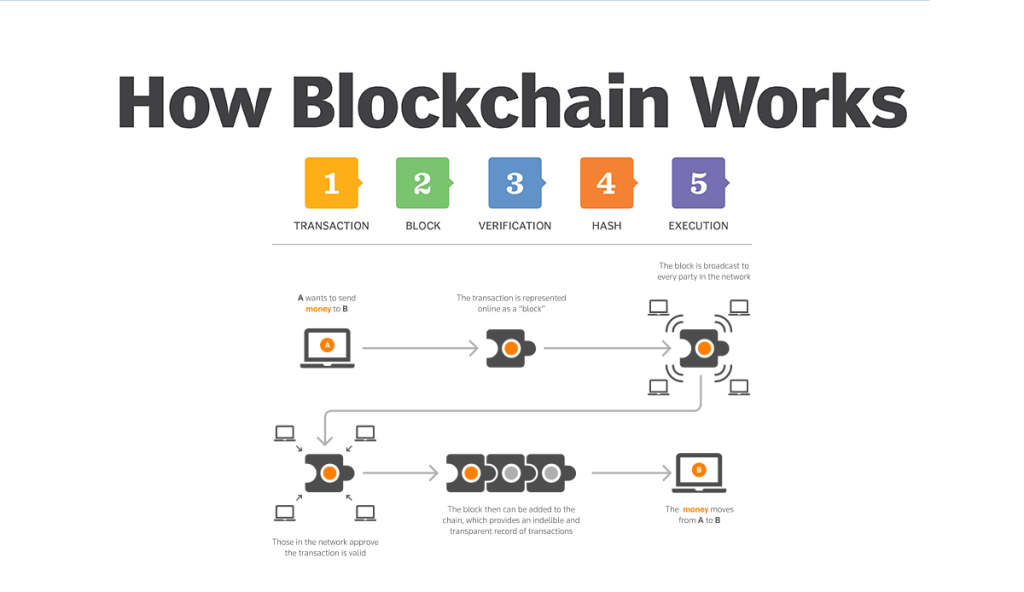
Blockchain technology has become one of the most important innovations in the digital world. It is the foundation behind cryptocurrencies like Bitcoin and Ethereum, but its impact goes far beyond digital currencies. Many industries are exploring blockchain because it offers transparency, security, and decentralization in managing digital transactions.
Despite its growing popularity, many people still find blockchain technology confusing. Terms such as blocks, nodes, miners, and consensus mechanisms can seem complicated for beginners. However, once these components are understood, the overall concept of blockchain becomes much clearer.
Learning how blockchain works is essential for anyone interested in cryptocurrency, decentralized finance, and Web3 technologies. Trusted educational platforms like CoinMarketCap and Investopedia provide detailed explanations about blockchain systems and their growing role in modern technology.
Table of Contents
What is a Blockchain
A blockchain is essentially a digital ledger that records transactions in a secure and decentralized manner. Instead of storing data in a single centralized server, blockchain distributes the data across a network of computers.
Every transaction that occurs on a blockchain network is recorded and verified by multiple participants. Once verified, the transaction is permanently stored in the blockchain.
This decentralized system ensures that no single entity has complete control over the data. It also makes the system highly secure because altering information would require changing records across the entire network simultaneously.
This unique design is one of the main reasons blockchain technology is considered highly trustworthy.
Understanding Blocks in Blockchain
Blocks are the basic units that store data within a blockchain. Each block contains several pieces of information that are important for maintaining the integrity of the system.
A block typically contains transaction data, which records details about transfers that occur on the network. It also contains a timestamp showing when the block was created.
Another important component is the cryptographic hash. A hash is a unique digital fingerprint generated for each block. This hash connects the current block to the previous block in the chain.
Because each block references the previous one through cryptographic hashing, altering a single block would require changing all the blocks that follow it. This makes blockchain extremely resistant to tampering.
More technical explanations about blockchain structure can be found on educational resources like CoinDesk Learn.
What Are Nodes in Blockchain
Nodes are computers connected to the blockchain network. Each node stores a copy of the entire blockchain ledger and participates in maintaining the network.
When a new transaction occurs, it is broadcast to all nodes in the network. These nodes verify whether the transaction is valid according to the rules of the blockchain.
Because multiple nodes verify transactions independently, the system becomes decentralized and secure. Even if some nodes fail or behave maliciously, the network continues to operate because many other nodes still maintain the correct version of the ledger.
Nodes play a crucial role in ensuring transparency and reliability within blockchain networks.
What Are Miners in Blockchain
Miners are participants in certain blockchain networks who validate transactions and add new blocks to the chain. Mining is most commonly associated with cryptocurrencies such as Bitcoin.
In the mining process, powerful computers compete to solve complex mathematical problems. The first miner to solve the problem gets the right to add a new block to the blockchain.
As a reward for their work, miners receive newly created cryptocurrency along with transaction fees. This reward system motivates participants to contribute computing power to maintain the network.
Mining helps secure the blockchain by making it extremely expensive and difficult for attackers to manipulate the network.
Information about blockchain mining and cryptocurrency markets can also be explored through platforms like CoinGecko.
Consensus Mechanisms
Consensus mechanisms are protocols that ensure all participants in a blockchain network agree on the validity of transactions. Without consensus mechanisms, decentralized systems would struggle to maintain a consistent version of the ledger.
One of the most well known consensus mechanisms is Proof of Work, which is used by Bitcoin. In this system, miners solve complex puzzles to validate transactions and create new blocks.
Another popular mechanism is Proof of Stake. Instead of relying on mining power, this system selects validators based on the amount of cryptocurrency they hold and are willing to lock in the network.
Consensus mechanisms help maintain trust and prevent fraudulent transactions in decentralized systems.
Why Blockchain is Secure
Blockchain technology is considered highly secure due to its decentralized structure and cryptographic design.
Because data is stored across multiple nodes, there is no single point of failure. Even if one part of the network is attacked, the rest of the system continues functioning.
Cryptographic hashing ensures that any attempt to modify a block becomes immediately noticeable. If someone tries to change transaction data, the hash changes and the network rejects the tampered block.
These security features make blockchain suitable for applications that require high levels of trust and transparency.
Real World Impact of Blockchain
Blockchain technology is already being used in many industries beyond cryptocurrency.
Financial institutions are exploring blockchain to improve cross border payments and reduce transaction costs.
Supply chain companies use blockchain to track goods and verify product authenticity. This helps reduce fraud and improve transparency in global trade.
Healthcare organizations are researching blockchain based systems to secure patient records and control access to sensitive data.
As blockchain technology continues to develop, its real world applications are expected to expand even further.
Conclusion
Blockchain technology works through a combination of blocks, nodes, miners, and consensus mechanisms. These components create a decentralized system where transactions can be recorded securely without relying on a central authority.
Blocks store transaction data, nodes maintain copies of the ledger, miners validate transactions, and consensus mechanisms ensure agreement across the network. Together, these elements form a powerful system that provides transparency, security, and trust.
As blockchain adoption continues to grow across industries, understanding how this technology works is becoming increasingly important. From cryptocurrencies to supply chains and digital identity systems, blockchain is shaping the future of digital innovation.
Also Check What is Blockchain Technology – Comprehensive Guide 2026
